
Methodical Excellence at Every Stage of Your EA Transformation.

Architecture Development Approach on request
Conference Room Pilot (CRP) Methodology
Value Stream Mapping (VSM) Methodology
To-Be Process Mapping Methodology
Detailed Business Requirements Mapping Methodology
Build the Trackable Delivery Plan Methodology
Disciplined, Repeatable, Measurable — EA Transformation Done Right.

Business Process Analysis and Design
IT/OT Integration Approach
Application Modernization Methodology
Where Enterprise Architecture Meets Intuitive Experience Design.

User Journey Mapping Methodology
Phase 0 on request Discovery & Architecture Baseline (CRP Preparation)
Bring clarity to current operations, personas, and friction points.
Walkthrough of the Current Process
- Step-by-step review of the existing workflow.
- Identify where systems, people, and data interact.
Segregate Personas
- Classify user types (operators, schedulers, administrators, external users, etc.)
- Understand persona roles, responsibilities, constraints, and motivations.
Identify Current Behavior
- Capture how users perform activities today, including workarounds.
- Observe actual vs. documented behavior.
Architecture Development Approach
Phase 0 on request Discovery & Architecture Baseline (CRP Preparation)
Bring clarity to current operations, personas, and friction points.
Walkthrough of the Current Process
- Step-by-step review of the existing workflow.
- Identify where systems, people, and data interact.
Segregate Personas
- Classify user types (operators, schedulers, administrators, external users, etc.)
- Understand persona roles, responsibilities, constraints, and motivations.
Identify Current Behavior
- Capture how users perform activities today, including workarounds.
- Observe actual vs. documented behavior.
Phase 1 Discovery & Architecture Baseline
Assess existing documentation, data, and system insights related to current operations.
Define Scope and Objectives
- Clarify business goals, target areas, constraints, and desired outcomes.
Identify Stakeholders
- Business owners, process SMEs, data owners, architects, operations, technology teams.
Gather Documentation and Data
- Existing process maps, system diagrams, SOPs, policy documents, KPIs, integration maps.
Conduct Interviews and Workshops
- Elicit current-state workflows, challenges, issues, and operational realities.
Document and Model the Current State using standardized modeling techniques and EA frameworks:
- Business Layer – modeled using BPMN 2.0.
- Data / Information Layer – modeled using ER diagrams, data lineage, data stores.
- Applications Layer – application inventory, interfaces, APIs, dependencies.
- Technology Layer – infrastructure, networks, platforms, hosting.
Toolsets
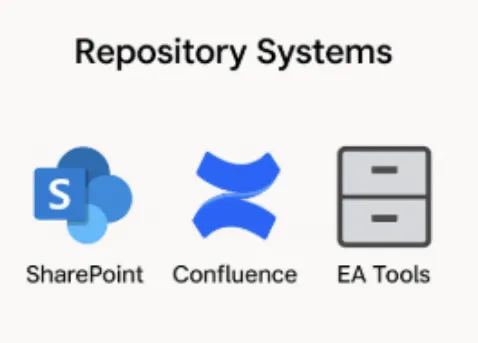
Deliverables
As-Is Business Process Models As-Is Data/Information Architecture Models As-Is Application Architecture Maps As-Is Technology Architecture Diagrams Interviews & Workshop Summary Logs Documentation Archive
Phase 2 Future-State (To-Be) Process Design
Define Scope and Objectives
- Establish measurable objectives.
- Download Case in Point of how onboarding process was reduced from 35 days to 5 days.
Deliverables
To-Be Vision Statement To-Be Process Diagrams (BPMN) High-level Target Architecture Concepts
Phase 3 Procedural Documentation (EATVX)
Deliverables
EATVX-based procedural text documentation Stage-by-stage task descriptions Verification and acceptance criteria for current-state processes
Phase 4 Standards & Process Recommendations
Analyze and Identify Gaps
- Evaluate inefficiencies, risks, technology constraints, manual bottlenecks, compliance issues.
- Apply structured frameworks (4-R model, Kano, QFD-HoQ).
Toolsets
QFD - House of Quality
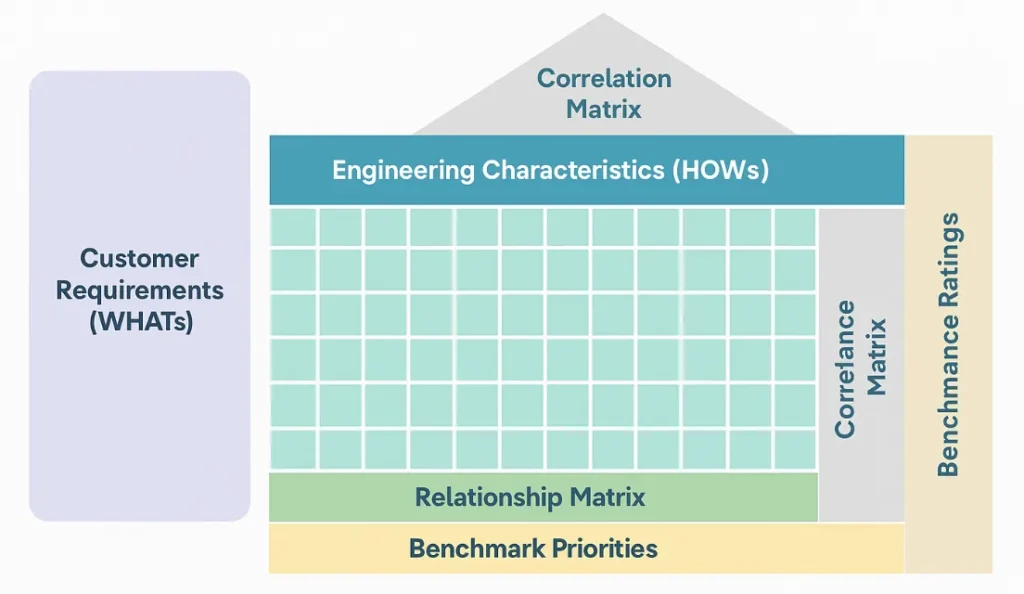
Gap analysis frameworks Industry standards (TOGAF, APQC, ISO models)
Deliverables
Gap Analysis Report Prioritized Process Improvement Recommendations Establish Baseline KPIs
Phase 5 Detailed Business & System Requirements
Translate identified gaps into business requirements, stakeholder needs, and solution needs.
Deliverables
Business Requirements Stakeholder Requirements Solution Requirements (Functional & Non-functional) Transition Requirements
Phase 6 Architecture Alignment & Solution Design
Align As-Is findings with target architecture roadmap.
- Validate impacts across business, data, applications, and technology.
Deliverables
Architecture Alignment Assessment Design Principles for Future-State Modernization or Improvement Blueprint
Phase 7 Traceable & Trackable Implementation Plan
Convert findings into a sequenced, trackable plan.
- Create a roadmap based on gap severity, dependencies, and value.
Deliverables
Implementation Roadmap Prioritized Backlog Traceability Matrix QFD-linked prioritization
Phase 8 Governance, Change Control & Continuous Improvement
- Store the As-Is documentation in an EA repository.
- Establish governance to maintain updated architecture baselines.
- Enable continuous improvement loops for processes and systems.
Toolsets
TOGAF Governance Balanced Scorecards Continuous Improvement KPIs
Deliverables
Repository of all As-Is and To-Be models Governance Framework Change Impact Assessments Continuous Improvement Register
Conference Room Pilot (CRP) Methodology
Phase 0 on request Discovery & Architecture Baseline (CRP Preparation)
Bring clarity to current operations, personas, and friction points.
Walkthrough of the Current Process
- Step-by-step review of the existing workflow.
- Identify where systems, people, and data interact.
Segregate Personas
- Classify user types (operators, schedulers, administrators, external users, etc.)
- Understand persona roles, responsibilities, constraints, and motivations.
Identify Current Behavior
- Capture how users perform activities today, including workarounds.
- Observe actual vs. documented behavior.