
Solving for Healthcare, Pharma, and Lifesciences

Are your technology platforms an engine for innovation or a source of friction?
Legacy systems, fragmented data, and siloed applications are no longer just inefficiencies; they are existential threats to your ability to compete. They impede the generative AI initiatives that could redefine Innovation, slow the adoption of cloud-native architectures essential for scalability, and create compliance vulnerabilities in a data-driven world.



Our approach centers on a modern, interconnected architecture that:
Improves R&D efficiencies - Leveraging AI / GenAI / Analytics
We assist in establishing the needed governance frameworks that align with the regulatory norms for data management. Thus, enabling the necessary controls for drug discovery and clinical trials optimization for reduced time to market.
Empowers Seamless Interoperability:
We architect resilient, FHIR-compliant platforms that break down data silos, ensuring a single source of truth that enhances care coordination, improves patient experience, and secures a unified view of your organization.
Ensures Continuous Compliance:
We embed governance and security into your architecture from the ground up, transforming regulatory burdens into a strategic advantage and providing continuous oversight that simplifies audits and safeguards patient data.
Explore our specialized solutions for the unique needs of healthcare, pharma, and life sciences industries.
Enterprise Architecture & Strategy
Business & Segment Capability Mapping
Functional & Logical Architecture
Operational & Information Architecture
Transformative Business & Process Modelling
Systems Requirements Elaboration
Data Table Design & ERD
Reusable Service Design
Discover the advantage of the Vivikta Value Matrix for HPLS
Business Architecture
Patient-Centric Value
Enables a unified patient experience across prevention, cure, and wellness journeys.
Research & Innovation
Aligns research, clinical, and business goals for 2x faster decision-making.
Operational Efficiency
Streamlines business workflows and reduces redundancy by 30%.
Regulatory & Compliance Readiness
Embeds governance models to ensure continuous compliance.
Information Architecture
Patient-Centric Value
Provides a longitudinal 360° patient data view across providers and payors.
Research & Innovation
Enables secure data sharing for real-world evidence and clinical trials.
Operational Efficiency
Delivers 40% faster data flow through standardized health data models (Observational Medical Outcomes Partnership and Fast Health Interoperability Resource).
Regulatory & Compliance Readiness
Ensures data integrity, traceability, and HIPAA/GDPR alignment.
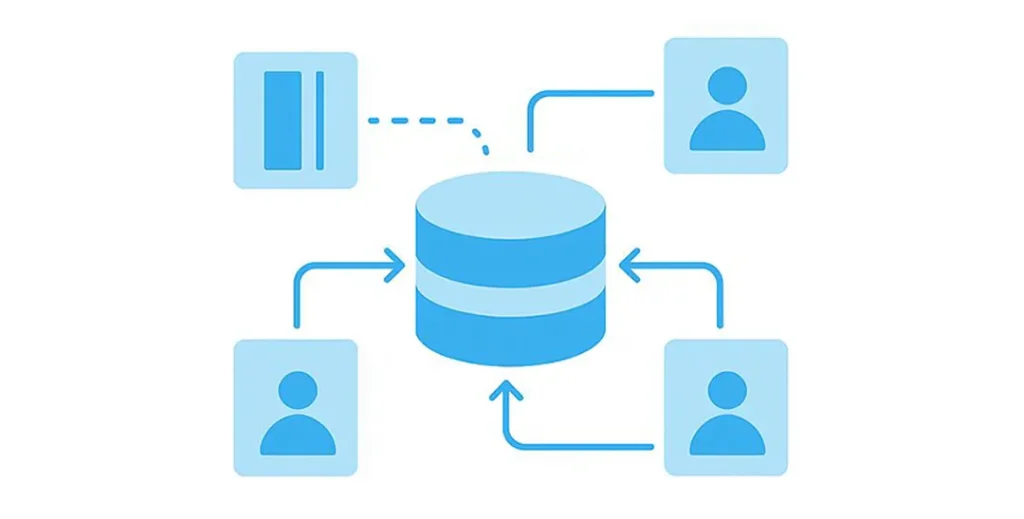
Application Architecture
Patient-Centric Value
Integrates EHR, LIMS, CRM, and telehealth systems for a seamless digital front door.
Research & Innovation
Supports Al, loT, and advanced analytics applications for drug discovery.
Operational Efficiency
Reduces IT redundancy and licensing costs by up to 35%.
Regulatory & Compliance Readiness
Guarantees application-level data privacy and role-based access control.
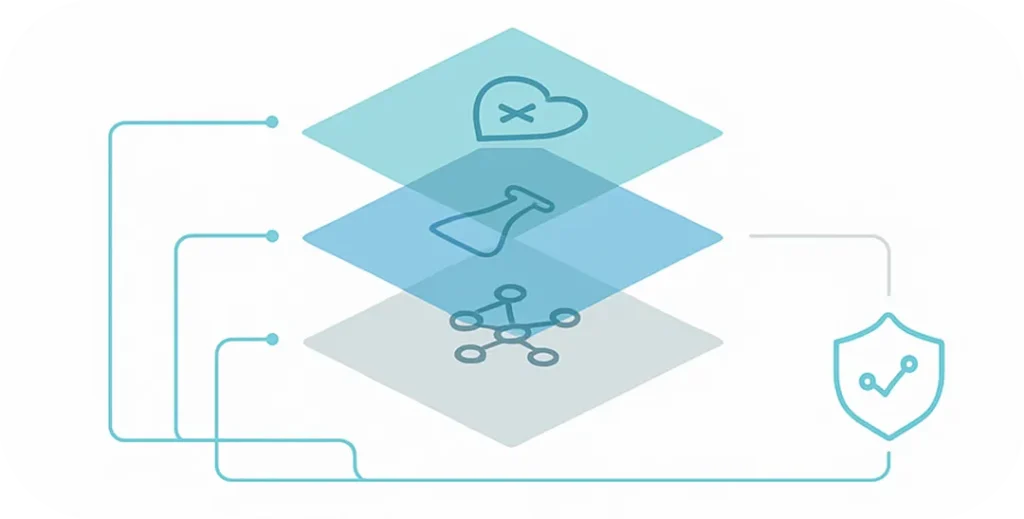
Technology Architecture
Patient-Centric Value
Builds scalable, cloud-native, and interoperable infrastructure for smart healthcare.
Research & Innovation
Facilitates high-performance computing for genomics and research workloads.
Operational Efficiency
Achieves 99.99% uptime and 40% faster deployment through automation.
Regulatory & Compliance Readiness
Implements secure data hosting and encryption frameworks (NIST/ISO).

Security & Governance Architecture
Patient-Centric Value
Protects patient data with Zero Trust, identity management, and blockchain audit trails.
Research & Innovation
Enables secure cross-border data exchange for global R&D.
Operational Efficiency
Reduces cyber risks by 80% through integrated threat management.
Regulatory & Compliance Readiness
Ensures 100% audit-readiness and data compliance at every system layer.

Achieve Measurable Impact
Patient Outcomes
Faster diagnosis, improved engagement
+40-60% efficiency
Operational Cost Optimization
Streamlined systems, reduced redundancy
-25-35% IT spend
Research Enablement
Accelerated data-driven innovation
2x R&D speed
Compliance & Trust
HIPAA/GDPR alignment and data security
100% readiness
Digital Agility
Faster adoption of AI, IOT, and blockchain
3x innovation capacity
Why It Matters
Bridging clinical care, data science, and digital innovation — ensures that every architecture decision drives measurable value:
Patients
gain control of their data via interoperable health wallets.
Researchers
accelerate discovery through AI-ready, compliant data ecosystems.
Organizations
achieve unified, secure, and cost-efficient operations.
Regulators
gain transparent, auditable insights into data integrity and process compliance.
Ready to Architect the Future of Health?
Move beyond transactional interactions to deliver a personalized, seamless patient experience
Integrate patient-facing applications with back-end systems, enabling consistent, connected care.
Improve interoperability for coordinated care and reduced error rate
Break down data silos with a standardized, FHIR-compliant framework that ensures seamless data exchange across departments, facilities, and external partners.
Focus on what matters most: the patient
Leverage data-driven insights to optimize operational workflows, reduce administrative burdens, and improve the quality of care.
Transform R&D from a fragmented process into an agile, data-driven engine
Build data integration and analytics foundation needed to accelerate drug discovery and clinical trial optimization.
Navigate the complex regulatory landscape with confidence
Embed governance directly into your architecture to create an intelligent compliance layer that provides continuous oversight and accelerates audit readiness.
Turn your vast data resources into a strategic asset
Transition from siloed systems to a federated data architecture for better decision-making across the value chain.
Build flexible, adaptive architectures
Adopt new technologies like AI, cloud computing, and IoT, accelerating innovation in R&D and clinical trials.
Reduce technical debt from legacy systems
Eliminate redundant applications, and optimize technology investments for cost savings.
Create a unified view of operations
Streamline business processes across the enterprise.
Leverage analytics to make strategic decisions
Optimize resource allocation and predicting patient outcomes. Establish a centralized data repository for streamlined access and insights.
Our Services in Enterprise Consulting for HPLS Sector
Strategic Blueprint Creation
IT Alignment Integrate IT with business goals. Investment Planning Detailed technology investment plans. Efficiency Focus Support cohesive operations and business processes.
Architectural Clarity
System Unity Consolidate fragmented systems and processes Data Optimization Enhance data management. Resilient Ecosystem Develop a unified infrastructure.
Holistic Landscape View
Proactive Transition Shift to proactive management. Comprehensive Insights Understand the full operational ecosystem. Future-Ready Anticipate needs for informed decision-making.
Patient-Centric Digital Ecosystem Enablement
Achieving a 50% improvement in patient data accessibility and 40% faster care coordination.
Our EA advisory ensures the patient is at the center of health data flow, connecting payors, providers, pharma, and public health systems. This approach enables personalized, interoperable, and outcomes-driven healthcare experiences across the Prevention → Cure → Care → Wellness spectrum.
End-to-End Data Interoperability & Integration
Achieving a 70% improvement in data interoperability across EHR, LIMS, EMR, and CRM systems.
We establish FHIR-, HL7-, and OMOP-compliant architectures for data exchange between clinical, research, and operational entities. This reduces fragmentation and ensures holistic, real-time insights for clinicians and researchers.
Regulatory Compliance & Data Governance by Design
Achieving 100% compliance with HIPAA, GDPR, GxP, and 21 CFR Part 11 mandates.
Our EA experts embed data governance, lineage, and access control into system design, ensuring audit-ready and secure operations. This minimizes regulatory risks and strengthens stakeholder trust in data-driven decision-making.
Operational Efficiency & Cost Optimization
Achieving a 25–35% reduction in IT and operational costs; 20% improvement in process efficiency.
We streamline business and IT portfolios, eliminate redundancy, and optimize resource utilization through capability-driven planning. This enhances ROI and reduces total cost of ownership (TCO) across IT and clinical systems.
Legacy Modernization & Cloud Transformation
Achieving a 40% faster migration to cloud platforms and a 30% improvement in system uptime.
We provide a structured roadmap to replace or integrate outdated systems with modular, cloud-native, and API-based architectures. This improves scalability, resilience, and agility in supporting future digital health initiatives.
Strategic Alignment Between Business, IT, and Research
Achieving a 3× improvement in alignment between business strategies and technology initiatives.
Our EA design bridges gaps between clinical, R&D, and enterprise goals, ensuring all digital investments deliver measurable strategic value. This promotes a unified vision for innovation, regulatory readiness, and improved patient outcomes
Enhanced Risk Management & Cybersecurity
Achieving an 80% reduction in data breach and system downtime incidents.
We integrate security and privacy by design, implementing standardized frameworks like Zero Trust, NIST, and ISO 27001. This strengthens resilience against threats while protecting sensitive patient and research data.
Improved Decision-Making & Real-Time Analytics
Achieving a 40% faster executive decision turnaround and a 30% improvement in data accuracy.
We create data-driven architectures that unify operational and analytical platforms, enabling predictive insights for clinical, operational, and strategic decision-making.
Accelerated Innovation & Research Enablement
Achieving a 2× acceleration in clinical trial setup and 3× faster R&D data access.
Our EA design supports digital R&D ecosystems through data fabrics, AI integration, and IoT-connected research platforms. This shortens time-to-market for new drugs and therapies while ensuring compliance and traceability.
Enhanced Collaboration & Process Transparency
Achieving a 40% reduction in cross-departmental data silos.
Our EA consulting promotes enterprise-wide visibility and collaboration, harmonizing operations between clinical, regulatory, and commercial functions. This improves process transparency, decision quality, and the speed of multi-stakeholder initiatives.
Business Continuity & Resilience
Achieving 99.99% system availability and an 80% reduction in disruption recovery time.
Our EA defines redundancy, failover, and disaster recovery architectures at an enterprise scale. This guarantees continuity of care, research, and operations during crises or outages.
Foundation for Digital Transformation and SMART Health
Achieving 3× faster enablement of AI, IoT, and blockchain-based innovations.
Our EA creates the technical and governance foundation for digital health wallets, remote patient monitoring, and precision medicine. This positions the enterprise for participation in next-gen healthcare ecosystems, such as SMART Health, HL7 FHIR APIs, and decentralized trials.
Continuous Value Realization & EA Maturity Growth
Achieving 2× improvement in value realization from digital initiatives and a 30% faster innovation cycle.
We ensure EA embeds governance, KPIs, and feedback loops for continuous performance optimization. This sustains enterprise transformation maturity and secures long-term competitive advantage.
Sustainable and Responsible Architecture
Achieving a 20% improvement in energy efficiency of IT operations.
Our EA promotes green IT and sustainable infrastructure design principles. This supports ESG commitments and reduces environmental impact while optimizing digital resource usage.
Explore our specialized solutions
Business Segment and Capability Mapping Support for HPLS Sector
Business segment definition and analysis
Customer segmentation Patient-prescriber-provider behavioral and need mapping. Therapeutic area segmentation Condition-disease-specialty based grouping. Product-service segmentation Map entities: medical devices, OTC meds, gene therapies, health services. Operational segmentation Unit-level classification: R&D, manufacturing, commercial operations.
Business capability modeling and mapping
Strategic domain level mapping R&D, manufacturing, supply chain, patient care delivery, revenue cycle management, population health management, clinical operations. Sub-domain capability group structuring Drug discovery, clinical trials management, regulatory submission, diagnostics services, treatment planning, patient admission & discharge. Product-service segmentation Map entities: medical devices, OTC meds, gene therapies, health services. Discreet capability mapping Electronic document management, dossier creation, under-treatment planning, etc.
Capability assessment and visualization
Maturity assessment Capability effectiveness analysis. Heat mapping Maturity grading and risk assessment. Gap analysis Anticipate needs for informed decision-making
Roadmap development
Strategic prioritization Capability ranking based on high-low business impact. Application-to-capability mapping Identifying redundancies, technical debt, and opportunities for improvement. Technology roadmap Business vision alignment for long-term enterprise value creation.
Achieve measurable outcomes
Strategic Alignment Between Business, Clinical, and Research Goals
Achieving 3× improvement in alignment between strategic objectives and IT investments.
Our EA advisory translates enterprise strategies into capability maps that connect business functions, digital initiatives, and regulatory goals. This ensures every technology investment and operational initiative directly contributes to patient care, innovation, and compliance outcomes.
Unified View of Business Capabilities Across Segments
Achieving a 40% improvement in cross-functional collaboration efficiency.
Capability mapping provides a common business language across payors, providers, pharma, and regulators. This breaks silos and fosters consistent communication between R&D, clinical operations, manufacturing, supply chain, and commercial teams.
Improved Investment Prioritization and ROI Tracking
Achieving a 25–35% reduction in redundant technology spend and a 2× ROI on digital programs.
We provide value-based portfolio planning, mapping capabilities to business value streams and KPIs. This focuses investment on high-impact capabilities like digital trials, patient engagement, and regulatory reporting.
Operational Efficiency and Process Optimization
Achieving a 30% improvement in process efficiency across mapped capabilities.
Capability maps highlight gaps, overlaps, and dependencies, guiding process redesign and automation. This streamlines operations from clinical data management to pharmacovigilance and supply chain logistics.
Enhanced Regulatory Readiness and Traceability
Achieving 90% faster compliance reporting cycles.
Our Enterprise Architecture (EA) ensures each capability embeds regulatory and quality control checkpoints (HIPAA, GDPR, GxP, 21 CFR Part 11). This enables transparent, auditable alignment of operations with compliance requirements.
Data-Driven Decision-Making Enablement
Achieving 40% faster insight generation across business units.
Capability mapping aligns information flows and data ownership to business outcomes, ensuring clean, consistent data. This supports evidence-based decisions for both patient care and strategic planning.
Faster Digital Transformation Execution
Achieving a 50% reduction in transformation planning time and a 30% improvement in implementation success rates.
We provide roadmaps linking capabilities to digital initiatives, ensuring modular and scalable transformation programs. This accelerates digital health initiatives, clinical trial automation, and patient engagement platforms.
Business Model Innovation Enablement
Achieving a 2× increase in innovation adoption rate.
Capability mapping identifies gaps and future-state capabilities needed for emerging models, such as precision medicine and decentralized trials. This empowers organizations to innovate rapidly while maintaining operational and regulatory alignment.
Improved Governance and Decision Transparency
Achieving a 60% reduction in decision bottlenecks during planning and approval cycles.
Our EA frameworks establish capability ownership, maturity assessment, and governance models across segments. This provides accountability, visibility, and consistency across decision-making layers.
Performance Benchmarking and Continuous Improvement
Achieving a 30–40% improvement in capability maturity over 18–24 months.
Our EA advisory introduces capability maturity models with measurable KPIs, such as agility, compliance, and efficiency. This enables organizations to continuously assess, evolve, and optimize business performance.
Organizational Agility and Change Management
Achieving a 2× faster adaptation to regulatory, market, or technology changes.
We establish modular business capability architectures, allowing flexibility to reconfigure operations or adopt new technologies. This ensures rapid response to policy changes, mergers, or disruptive innovations.
Clear Visibility for Leadership & Stakeholders
Achieving a 45% improvement in leadership visibility into enterprise operations and transformation readiness.
Capability maps serve as executive dashboards, linking strategic themes like “Digital Health,” “Patient Engagement,” and “Clinical Innovation” to measurable outcomes. This increases leadership confidence and governance control over transformation progress.
Explore our specialized solutions
Functional & Logical Architecture support for HPLS sector
Streamlining workflows and processes
Process mapping Identifying redundancies and bottlenecks. Standardization Designing, streamlining, and standardizing workflows. Automation Implementing automated processes for efficiency.
Improving Clinical and Operational Functions
R&D integration Connecting data across drug development stages. Healthcare delivery Linking services, roles, and technology. Bottleneck reduction Enhancing transactional efficiencies.
Aligning IT with Business Strategy
Strategic support Ensuring technology investments align with business goals. Objective fulfillment Accelerating drug discovery and improving patient outcomes. Cohesive solutioning Eliminating disjointed IT implementations.
Implementing New Business Models
Transition blueprint Providing support for new care models. System realignment Aligning clinical, financial, and operational systems. Data-driven decisions Enabling decisions based on shared goals and data.
Mastering Data Complexity and Interoperability with Standardized Integration Frameworks
Fragmentation challenge Addressing fragmented data across legacy systems. Unified data view Implementing frameworks like FHIR. Source integration Combining data from EHRs, lab systems, and IoT devices.
Designing Governed Data Architectures
Centralization goals Establishing a centralized data architecture. Quality & compliance Ensuring data quality, consistency, and security. Regulatory alignment Adhering to regulations like HIPAA and GDPR. Strategic asset creation Transforming data into valuable assets for analytics and decisions.
Addressing Legacy System Challenges
Technical debt Providing a structured roadmap for outdated IT systems. Risk mitigation Reducing risk and cost in system assessment and replacement. Seamless integration Facilitating integration with new systems.
Enabling Regional / Cross-Organizational Integration
Common frameworks Designing frameworks for data sharing. Process alignment Aligning processes across hospitals and clinics. Continuity of care Ensuring seamless care transitions. Research initiatives Supporting large-scale research projects.
Adopting Modern Technologies
Seamless tech integration Introducing modern technologies like cloud computing. AI solutioning Implementing AI into existing landscapes. Framework for modern interaction Providing structure for technology integration. Modular approach Employing technologies like microservices for adaptability.
Achieve measurable outcomes
Patient-Centric Data Interoperability
Achieving a 40–60% faster cross-organization data exchange through interoperable digital health platforms.
This approach places the patient at the center of health information interoperability, seamlessly connecting payors, providers, and pharma. It enables real-time clinical insights and offers 360° patient visibility across systems.
Secure, Immutable & Source-Managed Data
Achieving a 70% reduction in data reconciliation errors through blockchain-enabled provenance tracking.
This ensures data integrity, privacy, and traceability across the Prevention → Cure → Care → Wellness continuum. Patients can access verified health data via SMART IT Certified Digital Health Wallets, empowering self-care and consent-driven sharing.
Compliance-Ready Interoperability with CDC Standards
Achieving 100% compliance alignment with CDC interoperability requirements for Electronic Case Reporting (eCR), Electronic Laboratory Reporting (ELR), and Immunization Information Systems (IIS).
This streamlines public health reporting and pandemic response cycles. It reduces manual reporting by 80% through automated, standardized data pipelines.
Blockchain-Based Trust Architecture (Ethereum Quorum)
Achieving a 50% reduction in data validation latency and 99.9% auditability of transactions.
This solution leverages Microsoft-shortlisted Health Records Wallet Solutions built on Ethereum’s Quorum for global health record interoperability. It builds stakeholder trust through a tamper-proof, decentralized data exchange model.
Enhanced Operational Efficiency & Cost Optimization
Achieving 25–35% IT cost savings through system consolidation and legacy modernization.
Streamlined workflows eliminate redundancy, reduce licensing costs, and improve clinician productivity. This enhancement improves patient throughput and operational margins.
Improved Patient Outcomes & Experience
Achieving a 20% improvement in patient satisfaction, measured via PROMs & PREMs.
Real-time, integrated data enables personalized care, faster diagnosis, and improved engagement. This leads to better care coordination across telehealth, labs, and EHR systems.
Risk Management & Regulatory Compliance
Achieving a 90% reduction in compliance violations and data breach incidents.
This approach embeds HIPAA, GDPR, and FDA compliance into architecture governance, reinforcing patient trust and organizational reputation.
Strategic Agility & Governance Alignment
Doubling technology adoption speed for AI, IoT, and precision medicine initiatives.
This is accomplished through a flexible, modular architecture that adapts to policy or market shifts, enabling continuous innovation and rapid scaling of digital health ecosystems.
Informed, Data-Driven Decision-Making
Achieving a 30–40% faster decision turnaround with unified EA dashboards.
By aligning IT investments with business outcomes through visibility into value streams, this approach accelerates enterprise transformation and performance optimization.
Explore our specialized solutions
Transformation Business Process Modelling for HPLS Sector
Strategic Alignment and Vision Setting
Strategic alignment Aligning IT and operations with business goals like improving patient outcomes, accelerating drug development, and achieving operational excellence. Workshops and Roadmaps Facilitating workshops to create a unified organizational direction and build tailored transformation roadmaps for HPLS functions. Seamless integration Facilitating integration with new systems.
Embedding Advanced Technologies
Technology integration Integrating and scaling technologies like AI, Machine Learning, IoT, and Data analytics. Automation and insights Enabling intelligent automation, real-time insights, and supporting data-driven decisions.
Process Discovery and Optimization
Process mapping Using workshops and tools to map “as-is” processes. Identifying inefficiencies Uncovering inefficiencies and automation gaps in HPLS value chains like R&D, Clinical trials, Pharmacovigilance, and Supply chain. Workflow redesign Creating lean, agile, and cost-effective processes.
Risk Management and Regulatory Compliance
Regulation navigation Navigating regulatory landscapes by embedding policy enforcement, audit trails, and decision checkpoints. Compliance assurance Ensuring transformations meet compliance needs such as data privacy and clinical trial standards. Risk Mitigation Mitigating legal and operational risks.
Operating Model Transformation and Change Management
Model redesign Breaking down silos, encouraging collaboration, and embedding agility. Change management Implementing necessary programs for role redefinition, upskilling, and communication strategies. Adoption success Ensuring successful process adoption by staff and stakeholders.
Performance Measurement and Governance
KPI monitoring Using analytics for ongoing assessment. Continuous improvement Driving efforts with measurable objectives and continuous enhancement initiatives. Seamless integration Facilitating integration with new systems.
Achieve measurable outcomes
Patient-Centric Value Chain Transformation
Achieving a 35–50% improvement in end-to-end care coordination efficiency.
By embedding the patient journey at the core of business process transformation across clinical, research, and operational ecosystems, this approach ensures a holistic “Patient 360” experience. It enhances care delivery and health outcomes through connected process visibility.
Unified Business Process Landscape & Interoperability
Achieving a 40% reduction in process duplication and a 60% faster interoperability mapping.
This harmonizes diverse healthcare workflows across payors, providers, pharma, and regulators into a single logical architecture, enabling seamless data and process orchestration. The result is a reduced administrative burden and improved time-to-insight.
Compliance and Process Standardization
Achieving 90% compliance alignment with industry frameworks such as HL7 FHIR, HIPAA, GDPR, ISO 13485, and GxP.
This approach integrates regulatory checkpoints directly into business process models to ensure proactive compliance, reducing audit preparation time by 70% and ensuring continuous regulatory readiness.
AI-Enabled Process Intelligence and Automation
Achieving a 45% increase in process throughput through robotic process automation (RPA) and AI-driven decision flows.
Enterprise Architecture (EA)-guided Task-based Process Management (TBPM) enables the automation of repetitive tasks, such as claims processing, lab test routing, and clinical data validation. This boosts staff productivity and allows clinicians to focus on patient-centric tasks.
Operational Efficiency & Cost Optimization
Achieving a 25-35% reduction in operational costs and 20% faster service delivery.
This is accomplished by rationalizing redundant business functions and integrating value streams across departments, resulting in measurable savings in IT maintenance, workforce allocation, and time-to-market for new treatments.
Agile Research and Clinical Innovation Enablement
Achieving a 30% faster R&D cycle time through process digitization and data integration.
This approach streamlines trial design, data capture, and regulatory submissions through standardized digital workflows, accelerating clinical development and innovation adoption across therapeutic areas.
Data-Driven Decision-Making and Visibility
Achieving a 40% improvement in executive decision turnaround using real-time EA dashboards.
This integration involves key performance indicators (KPIs), patient outcomes, and operational data into unified process views for CxOs, enabling predictive, evidence-based decision-making across clinical, operational, and commercial domains.
Enhanced Risk Management & Business Resilience
Achieving an 80% reduction in operational disruption risk and 99.9% process availability.
Through TBPM, vulnerabilities, dependencies, and failure points within the business architecture are identified, ensuring resilient process continuity across supply chains, clinical operations, and patient services.
Strategic Alignment & Continuous Improvement
Achieving a 2× increase in strategic initiative realization rate.
This approach aligns enterprise-wide transformation goals with day-to-day business operations using traceable process models, providing a living blueprint for continuous optimization and digital maturity progression.
Secure and Trusted Data Exchange Architecture
Achieving a 70% improvement in secure data interoperability and auditability.
This architecture leverages blockchain and identity management within process models to ensure trust and traceability, strengthening collaboration between research institutions, providers, and regulators while safeguarding patient data.
Explore our specialized solutions
Operational and Information Architecture for HPLS Sector
Aligning IT with Business Strategy
Strategic IT integration Ensuring technology investments and IT processes support core HPLS goals by improving patient care delivery, accelerating drug discovery, and reducing costs. IT as an enabler Positioning IT as a strategic enabler beyond just a support function.
Optimizing Workflows and Processes
Workflow analysis Evaluating existing, often fragmented workflows in areas like clinical trials and supply chain management. Redesign and automation Introducing efficiencies by identifying bottlenecks and implementing automation and optimization models.
Improving Operational Efficiency and Agility
Streamlined processes Creating a unified, flexible operating model to respond swiftly to market changes, adapt to new regulations, and meet public health demands. Identifying inefficiencies Uncovering inefficiencies and automation gaps in HPLS value chains: R&D, Clinical trials, Pharmacovigilance, Supply chain, etc. Workflow redesign Creating lean, agile, cost-effective processes.
Enabling Cross-Functional Collaboration
Holistic enterprise view Delivering insights into the organization’s capabilities, systems, and workflows. Breaking silos Facilitating coordination across departments like R&D, Manufacturing, and Clinical divisions. Risk Mitigation Mitigating legal and operational risks.
Enhancing Interoperability
Breaking data silos Providing standardized integration frameworks such as Fast Healthcare Interoperability Resources (FHIR), APIs, etc. Seamless data exchange Fostering connectivity between disparate systems like Electronic Health Records (EHR), Imaging systems, and Billing systems.
Managing Legacy Systems
Legacy assessment Providing structured roadmaps to integrate and replace outdated systems. Cost-effective modernization Aiding the adoption of modern digital tools efficiently.
Optimizing Data Management and Governance
Centralized data architectures Building centralized, governed data frameworks to ensure data accuracy and consistency, real-time accessibility, and security and compliance.. Strategic asset creation Transforming data management from a burden into an enabler for analytics and strategic decision-making.
Ensuring Data Security and Compliance
Regulatory adherence Complying with regulations like HIPAA and GDPR. Integrating compliance in architecture design for enabling robust security measures, efficient access controls, and comprehensive encryption policies. Risk mitigation Proactive incorporation of risk considerations ensures data integrity and protection.
Facilitating Strategic Decision-Making
Unified data landscapes Providing a holistic view enables informed, rapid decisions and utilization of complete information. Insightful leadership Empowering teams with comprehensive, coherent data insights.
Modernizing IT Infrastructure
Guided migration strategy Orchestrating transitions to modern, scalable platforms, focusing on hybrid or multi-cloud environments, handling vast HPLS sector data volumes, and supporting advanced technologies like AI and machine learning. Breaking silos Facilitating coordination across departments like R&D, Manufacturing, and Clinical divisions. Risk mitigation Mitigating legal and operational risks.
Achieve measurable outcomes
Patient-Centric Information Continuum
Achieving 50% faster access to longitudinal patient records across care, research, and wellness systems.
This continuum aligns operational workflows and information flows to deliver a unified patient view, ensuring continuity of care across the Prevention → Cure → Care → Wellness journey. It improves clinical outcomes, reduces diagnostic delays, and enhances personalized care delivery.
Unified Health Data Interoperability
Achieving a 60% improvement in data integration efficiency across EHRs, labs, IoT devices, and payer systems.
This interoperability harmonizes structured and unstructured data sources into a common FHIR/OMOP/HL7-compliant architecture, enabling seamless, standards-based health data exchange across internal and external ecosystems.
Intelligent, Data-Driven Operations
Achieving a 40% improvement in operational decision accuracy via real-time analytics and process intelligence.
This approach leverages information architecture to enable data federation and contextual analytics, while operational architecture ensures efficient execution of insight-driven workflows. It empowers executives, clinicians, and researchers with actionable intelligence for faster, more precise decisions.
Enhanced Data Governance, Security & Compliance
Achieving a 90% reduction in data non-compliance incidents and 99.9% traceability of sensitive transactions.
This initiative implements data lineage, classification, and access control mechanisms in compliance with HIPAA, GDPR, GxP, and 21 CFR Part 11 standards. It protects patient data integrity, ensures regulatory readiness, and builds institutional trust.
Operational Efficiency & Cost Optimization
Achieving a 25–30% reduction in operating costs and 35% faster service delivery times.
This involves comprehensive EA advisory optimizing clinical, supply chain, and back-office operations through lean process redesign and digital automation. It improves care delivery throughput while reducing administrative overhead.
Scalable, Modular Infrastructure Enablement
Achieving 2× scalability in data storage and a 50% improvement in compute utilization.
This strategy guides organizations toward cloud-native, microservices-based operational models that support advanced analytics and interoperability. It ensures agility and resilience to handle increasing data volumes from genomics, imaging, and clinical trials.
Business Continuity & Resilience
Achieving 99.99% system uptime and an 80% reduction in incident recovery time.
Our EA advisory defines redundancy, recovery, and failover strategies at both operational and information layers. This approach guarantees uninterrupted critical healthcare and research operations even during disruptions.
Accelerated Research & Innovation Enablement
Achieving a 30% reduction in time-to-insight for clinical trials and research analytics.
This approach uses information architecture to support federated data sharing between pharma, providers, and research institutions through secure data fabrics. It enables collaborative innovation, faster drug discovery, and evidence-based medicine.
Strategic Alignment & Performance Transparency
Achieving a 45% improvement in KPI tracking and performance benchmarking across functional units.
This strategy provides visibility and traceability between strategic goals, operational processes, and supporting data assets. It aligns IT, business, and clinical objectives for measurable transformation impact.
Integration of Emerging Technologies
Achieving 3× faster adoption of AI, IoT, and Blockchain-enabled health solutions.
We build EA frameworks to ensure these innovations are securely embedded within the operational and information landscape. This drives precision health, predictive diagnostics, and trusted health data ecosystems.
Explore our specialized solutions
Systems requirements elaboration for HPLS Sector
Linking Objectives to Strategies
Goal clarification Guiding HPLS organizations in aligning project objectives with top-level strategies such as elevating patient outcomes, accelerating drug discovery, and cutting costs efficiently. Value assurance Ensuring IT investments deliver tangible business value, preventing misaligned projects.
Facilitating Comprehensive Stakeholder Engagement
Diverse needs integration Evaluating existing, often fragmented workflows in areas like clinical trials and supply chain management. Consensus building Fostering shared understanding through workshops and communication sessions. Translating needs into precise system requirements, capturing both functional and non-functional aspects.
Managing Complexity and Interoperability
System landscape optimization Providing a comprehensive view of current system landscapes, data flows, and interdependencies. Integration frameworks Introducing standards like FHIR, APIs for seamless data exchange, and developing roadmaps for smooth transitions to modern tech (e.g., cloud-based AI tools).
Embedding Compliance and Risk Management
Embedded protocols Ensuring regulatory compliance by integrating risk assessments and security protocols in architecture design. Architectural integration Addressing vulnerabilities through structured frameworks, aligning with regulations like HIPAA and GDPR.
Standardizing Processes and Documentation
Framework utilization Adopting frameworks like TOGAF or HPLS-specific models to formalize documentation, uniformly categorizing requirements, and ensuring consistent documentation practices. Single-source of truth Reducing the risk and cost of rework by providing a single source of truth for project requirements encompassing high-level business needs and detailed technical specifications.
Supporting Future-Proofing and Scalability
Forward-thinking strategy Ensuring requirements cater to both present and future needs, adapting to emerging technologies. Scalability assurance Designing systems to accommodate organizational growth efficiently. Agility in evolution Preparing organizations to adapt swiftly to technological advancements and market shifts.
Achieve measurable outcomes
Accelerated Alignment Between Business, Clinical, and IT Goals
Achieving a 35-45% reduction in rework and scope creep during implementation.
Our EA advisory team ensures that system requirements are traceable to business capabilities, regulatory mandates, and clinical workflows. This enables a shared understanding between business, IT, and operations, ensuring that every system built supports measurable business outcomes.
Improved Quality and Completeness of Requirements
Achieving a 50% reduction in post-deployment defects and missed requirements.
Our EA-driven SRE leverages model-based requirements engineering and use-case mapping across the full lifecycle of healthcare and pharma systems. This enhances solution quality, reduces testing cycles, and ensures “first-time-right” delivery.
Enhanced Regulatory Compliance by Design
Achieving 100% audit readiness for HIPAA, GDPR, GxP, and 21 CFR Part 11 compliance.
We embed regulatory checkpoints and validation criteria into requirement baselines, ensuring compliance-driven design. This approach minimizes the risk of non-compliance, accelerates validation, and ensures faster regulatory submissions.
Seamless Integration and Interoperability Planning
Achieving a 60% improvement in integration success rate across EHR, LIMS, CRM, and ERP systems.
We ensure system requirements explicitly define interoperability standards such as FHIR, HL7, DICOM, and OMOP, along with data governance models. This approach enables unified patient and research data exchange across providers, payors, and pharmaceutical entities.
Optimized Cost, Time, and Resource Utilization
Achieving a 25–30% reduction in total cost of ownership (TCO) and 20% faster project delivery.
Our EA-guided requirement elaboration prioritizes high-value features and eliminates redundant functionalities. This ensures cost-effective investments aligned with measurable patient, research, and business outcomes.
Risk Reduction and Predictive Impact Analysis
Achieving a 70% decrease in late-stage project risks through proactive impact modelling.
Our EA framework utilizes traceability matrices, dependency models, and risk heatmaps to identify potential conflicts or design gaps early. This enhances project predictability and prevents downstream integration or compliance failures.
Improved Stakeholder Collaboration and Traceability
Achieving a 40% improvement in stakeholder satisfaction scores through effective requirement validation workshops.
Our EA frameworks ensure stakeholder-driven requirement capture utilizing cross-functional governance and visual architecture models. This approach aligns diverse perspectives — clinical, operational, research, and IT — around common priorities, enhancing collaboration and traceability.
Data and Workflow Standardization
Achieving a 50% improvement in master data consistency and a 30% reduction in workflow redundancy.
Our requirements elaboration aligns with enterprise data models, reference architectures, and process blueprints. This approach promotes reusable system components and standard operational models across multiple therapeutic or business units, enhancing efficiency and consistency.
Accelerated Innovation Enablement
Achieving 2× faster enablement of AI, IoT, and Digital Twin initiatives.
Clear, forward-compatible requirements ensure readiness for next-gen digital capabilities such as predictive analytics, connected devices, and real-world evidence systems. This approach strengthens agility for continuous innovation and digital transformation, propelling organizations towards a more dynamic and future-ready stance.
Strengthened Governance and Change Control
Achieving a 90% improvement in change request handling efficiency.
We integrate requirements traceability, configuration management, and governance workflows into SRE. This approach provides transparent visibility for regulators, project sponsors, and auditors, ensuring disciplined change management and enhancing the overall governance framework.
Strategic Value Realization and Continuous Improvement
Achieving 3× higher realization of intended business value post-implementation.
Our Enterprise Architecture (EA) ensures every system requirement is linked to measurable KPIs and strategic value drivers. This framework enables ongoing optimization, performance tracking, and the continuous evolution of enterprise systems, ensuring that business objectives are consistently met and refined.
Explore our specialized solutions
Data Table Design & ERD
Direct Support for HPLS Goals
Data model alignment Aligning data models, such as ERDs and table designs, with HPLS goals to enhance R&D acceleration, patient care improvement, and clinical trial efficiency. Cross-functional understanding Facilitating collaboration between tech teams and business stakeholders, including clinicians, researchers, and compliance officers, to ensure data designs meet operational needs.
Enforcing Data Governance and Quality
Governance Structure Establishing data governance frameworks by outlining policies for data lifecycle management, data quality standards, and design-level controls. This ensures accurate and reliable data creation along with consistent access controls and validation processes.
Ensuring Regulatory Compliance (HIPAA, GDPR, GxP)
Blueprint Integration Integrating regulatory requirements into data architectures to safeguard data privacy (HIPAA, GDPR), security, and maintain audit trails. Specific Protections Implementing data classification, access control, and encryption to secure sensitive information such as PHI/PII.
Improving Interoperability and Integration
Standardized Designs Utilizing ERDs to break down data silos through standardized formats and integration frameworks like FHIR. Holistic Data View Ensuring seamless system collaboration among EHR, LIMS, and Clinical Trials systems to enhance cross-functional analysis and decision-making
Standardizing Documentation and Best Practices
Integration of Industry Best Practices Employing recognized frameworks like TOGAF and DAMA-DMBOK to ensure consistent practices across the HPLS sector, fostering a structured approach to data architecture and management. Practice Adoption Leveraging proven methodologies that enhance data integrity and system reliability, promoting uniformity and efficiency.
Optimizing Database Performance and Scalability
Efficiency Through Normalization Guiding normalization processes to identify and reduce redundancies, improving performance and scalability through structured ERDs..
Comprehensive Documentation
Detailed Records Ensuring thorough documentation of Entity-Relationship Diagrams (ERDs), data dictionaries, and lineage to capture all data-related information accurately. Simplified Processes Streamlining system maintenance and updates by troubleshooting existing issues and facilitating seamless onboarding and training for new team members.
Achieve measurable outcomes
Patient-Centric Data Unification
Achieving a 50–60% improvement in cross-system patient data reconciliation accuracy.
Our EA-guided Entity-Relationship Diagram (ERD) and data table design establish a single source of truth across EHR, LIMS, CRM, and Clinical Trials systems. This unified approach provides a longitudinal, 360° view of patient health and outcomes, enabling personalized care and precision medicine for more accurate and effective healthcare delivery.
Interoperable and Standards-Compliant Data Models
Achieving 70% faster data exchange and mapping across FHIR, HL7, DICOM, and OMOP standards.
Our data models are aligned to healthcare interoperability standards, functioning at a semantic layer to enable easy integration with external data ecosystems. This structure ensures smooth data sharing among payors, providers, regulators, and research networks, facilitating efficient communication and collaboration across the healthcare landscape.
Improved Data Quality, Integrity, and Traceability
Achieving an 80% reduction in data duplication and a 90% improvement in referential integrity across datasets.
Our EA frameworks ensure that relational data design enforces primary and foreign key relationships, data lineage tracking, and validation constraints. These measures create a reliable, tamper-proof data foundation for clinical, operational, and research analytics, enhancing data accuracy and trustworthiness across the organization.
Enhanced Regulatory Compliance and Audit Readiness
Achieving 100% compliance with HIPAA, GDPR, and FDA 21 CFR Part 11 data management requirements.
Our ERDs include privacy, retention, and access control structures embedded directly at the data model level. This ensures auditable, compliant data usage and governance across systems and geographies, providing a robust framework for meeting regulatory demands efficiently and effectively.
Optimized Performance and Storage Efficiency
Achieving 35–40% faster query performance and a 25% reduction in storage overhead.
Our design features well-normalized data tables to reduce redundancy, while strategic denormalization ensures high-speed analytics and scalability. This approach improves responsiveness for both operational systems and analytical workloads, enabling more efficient data processing and storage management.
Accelerated Integration and Data Migration
Achieving a 50% reduction in ETL (Extract, Transform, Load) and data onboarding time.
Our EA-led ERDs standardize entity definitions across applications, reducing the need for custom data mapping and transformation efforts. This simplification accelerates data migration, enhances system integration, and supports modernization initiatives effectively.
Stronger Data Governance and Stewardship
Achieving a 90% improvement in data catalog accuracy and lineage visibility.
Our ERD documentation supports data ownership, classification, and stewardship frameworks, ensuring accountability and transparency. This capability enables proactive data governance and consistency across the enterprise, fostering a responsible and clear data management culture.
Foundation for Advanced Analytics, AI, and Machine Learning
Achieving 3× faster model training and data preparation cycles for AI/ML initiatives.
Our EA-driven data models organize data into well-defined subject areas, including patient, clinical event, drug, study, genomic, and claims, ensuring analytical readiness. This structure accelerates insights for population health, pharmacovigilance, and real-world evidence generation, enhancing the effectiveness and efficiency of analytics and machine learning endeavors.
Improved Collaboration Across Functional Domains
Achieving a 40% reduction in cross-departmental data silos.
A unified ERD provides a shared data language across R&D, clinical, operations, and regulatory teams. This clarity enhances collaboration, minimizes misunderstandings, and accelerates project alignment, fostering a more integrated and cooperative organizational environment.
Scalability and Future-Ready Architecture
Achieving 2× scalability in handling high-volume real-world data, such as genomics, wearables, and IoT.
Our EA ensures data models are modular, extensible, and cloud-compatible, supporting elastic scaling for evolving data landscapes. This approach future-proofs enterprise systems, making them ready for next-gen digital health ecosystems, and ensuring adaptability and growth alongside advancements in technology and data needs.
Faster Decision-Making and Reporting
Achieving a 45% improvement in reporting timeliness and accuracy.
Clean, structured data models feed enterprise dashboards, KPIs, and predictive analytics systems in real-time. This seamless integration enables evidence-based decisions at clinical, operational, and executive levels, enhancing the speed and reliability of decision-making processes across the organization.
Strategic Value Realization
Achieving 3× ROI on data management and analytics initiatives.
Aligns data models with enterprise value streams, including patient safety, R&D speed, and regulatory efficiency. This alignment converts data assets into measurable strategic advantage and innovation capability, enhancing overall organizational effectiveness and fostering growth and competitiveness in the market.
Explore our specialized solutions
Reusable Service Design for HPLS Sector
Direct Support for HPLS Goals
Blueprint Alignment Leveraging EA frameworks like TOGAF to align business goals, processes, and IT capabilities, ensuring enterprise-wide design perspectives that promote service reusability.
Promoting SOA and Microservices
Adoption of Modern Patterns Guiding HPLS organizations in adopting Service-Oriented Architecture (SOA) and Microservices architecture to enhance system flexibility and agility. Modular Development Emphasizing the creation of self-contained, modular, and reusable services, facilitating cross-application service usage, such as patient authentication.
Creating a Centralized Service Repository and Governance
Central Hub Implementation Building a central repository for reusable services and service documentation, enabling developers to discover and reuse existing services, thereby enhancing efficiency.
Establishing Data and Service Standards
Industry Standard Definition Defining standards, such as FHIR, for data exchange to enable seamless interoperability and efficient data flow across HPLS systems.
Embedding Compliance and Security
Built-in Compliance Integrating regulatory standards, such as HIPAA and GDPR, into service design to ensure that services have the necessary security, access controls, and audit capabilities. Simplifying compliance for applications by using shared services that inherently meet regulatory requirements.
Driving a Culture of Reuse
Leadership and Organizational Encouragement Providing guidance to overcome challenges, fostering a culture where reuse is integral to operations, thus maximizing efficiency and reducing redundancy.
Achieve measurable outcomes
Accelerated Digital Transformation and System Integration
Achieving a 50–60% faster time-to-market for new digital health solutions.
Our EA advisory frameworks establish reusable API and microservice patterns for clinical, operational, and research systems. This strategic framework enables the faster deployment of digital products, such as telehealth apps, trial data portals, and patient engagement platforms, driving innovation and enhancing user engagement efficiently.
Improved Interoperability and Data Exchange
Achieving a 70% reduction in integration effort across systems like EHR, LIMS, CRM, EMR, etc.
Our reusable service components are aligned with FHIR, HL7, and DICOM standards to ensure seamless health data flow. This alignment promotes interoperability between payors, providers, pharma, and regulators, supporting patient-centric data ecosystems and enhancing collaborative healthcare delivery and data management.
Enhanced Cost Efficiency and IT Rationalization
Achieving a 35–40% reduction in redundant service development and maintenance costs.
Our EA promotes service reuse and modularization, reducing duplication across departments and projects. This strategy optimizes the total cost of ownership (TCO) and maximizes the return on technology investment, ensuring more efficient and cost-effective operations within the organization.
Strengthened Regulatory Compliance by Design
Achieving 100% compliance alignment for HIPAA, GDPR, and GxP services.
Our EA embeds compliance policies, data encryption, and audit trails into reusable service templates. This approach ensures consistent enforcement of data privacy, integrity, and traceability across all digital initiatives, safeguarding organizational trust and regulatory adherence.
Increased Scalability and Future-Readiness
Achieving a 2× increase in scalability for digital health platforms.
Our EA-guided reusable service design supports API-first, cloud-native, and containerized architectures. This enables seamless scaling across diverse workloads, such as genomics, IoT monitoring, and clinical analytics, ensuring the platform is robust and future-ready to meet evolving healthcare demands.
Enhanced Operational Efficiency and Agility
Achieving a 30% reduction in application delivery cycle times.
Shared service catalogs enable rapid assembly of new workflows using pre-built components, such as patient consent, claims processing, and lab reporting. This approach enhances operational responsiveness to new business, clinical, or regulatory needs, streamlining processes and increasing organizational agility.
Consistent Data Quality and Semantic Integrity
Achieving a 90% improvement in data consistency across integrated systems.
Our EA defines standardized service contracts and data schemas, ensuring uniform semantics across systems. This reduces data discrepancies and enhances analytics accuracy, particularly for areas like population health and pharmacovigilance, providing reliable insights and strategic decision-making.
Faster Innovation and R&D Acceleration
Achieving a 40% faster enablement of AI, ML, and analytics use cases.
Reusable APIs expose standardized data services, such as patient records, drug interactions, and genomic data, to data scientists and innovators. This accelerates discovery cycles, predictive modelling, and translational research outcomes, driving innovation and impactful research in the healthcare sector.
Strengthened Governance and Service Lifecycle Management
Achieving a 60% improvement in governance efficiency through service versioning and cataloging.
Our EA establishes service registries, monitoring, and lifecycle policies, ensuring accountability and reuse. This provides a structured mechanism for managing service quality, compliance, and evolution across the enterprise, enhancing overall operational governance and sustainability.
Enhanced Business Agility and Ecosystem Collaboration
Achieving a 2× improvement in ecosystem onboarding speed for partners, regulators, and CROs.
Standardized reusable APIs facilitate secure and efficient external data sharing and ecosystem integration. This strengthens collaboration between research organizations, healthcare providers, and technology partners, driving seamless cooperation and enhanced business agility.
Reduced Risk and Improved System Reliability
Achieving an 80% reduction in integration-related system failures.
Our EA advisory ensures the reuse of validated, secure service components across multiple applications. This minimizes technical risk, ensures consistency, and enhances the reliability of critical healthcare workflows, safeguarding system integrity and operational continuity. KPIs, and predictive analytics systems in real-time. This seamless integration enables evidence-based decisions at clinical, operational, and executive levels, enhancing the speed and reliability of decision-making processes across the organization.
Continuous Improvement and Measurable ROI
Achieving a 3× increase in service reuse rate over 18–24 months.
Our EA establishes KPIs, reuse metrics, and dashboards to track service utilization and value contribution. This promotes continuous optimization and demonstrates tangible value from reusable service investments, ensuring measurable returns and sustained business benefits.